This is the ninth installment on this topic.
To read from the beginning please go to entries beginning 9/20/12.
 |
| 1010 Lake Forest Blvd (7 years post-Katrina) |
Returning from the stairwell filled with mostly elderly folks, I pushed through the chest-deep water back to the closest boat, now positioned in the corner of the meeting room at the base of the stairwell. Though only a few feet from the base of the steps, no-one could access the boat without submitting themselves and their senses to the chill of the murky waters or by being carried. As my thought process moved from the initial encounter with the residents, into planning logistics, my eye caught movement from a room to the left, adjacent to the meeting area in which we were now "staging" removal of the patient souls in the stairway.
To my surprise, I saw what clearly appeared to be a young family. Dad in chest deep water, maybe in his early 30's, mom a few inches shorter, each carrying a small child aged maybe 6 and 8. They plowed through the water as a unit moving toward the meeting room, and from their expression, decidedly toward the first boat. My first reaction, considering those in line positioned in the stairwell to wait their turns, was that these youngsters were not following the certain protocol I had already formulated in my mind. They were not lending proper respect to the old folks organized in proper fashion as if they had each drawn numbers to be serviced in order and with appropriate decorum. This young family was "cutting". In this makeshift rescue by untrained organizers, for a moment, it kinda pissed me off.
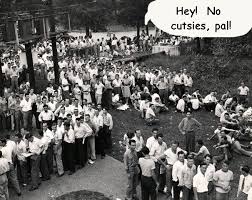
In the wisdom of the moment it struck me that, this young family was as anxious to remove itself from this indefinite aquatic isolation as were those in the stairway. It did not appear that either group was aware of the others. Even if they had been, my experiences later in the day would fortify the notion that among those ready to leave, "first come first served" would, in many cases be the primary protocol. For efficiency, the young family was placed into the first boat and pushed away toward the exit allowing the next small craft to drift into place.

With the first four rescued and a few more aluminum craft drifting in to begin moving those in line, Sara ascended the first of many stairways in the building to begin her floor-by-floor “evaluation”. Within minutes, many of the residents knew Sara's name and she knew theirs. Instant friends. Once the situation was assessed, I left the transport to others and joined Sara inside the building. With my hiking boots filled with water, and my clothes saturated and dripping, I accompanied Sara up into this unexplored territory to learn the specifics of what we would be facing.
In the wisdom of the moment it struck me that, this young family was as anxious to remove itself from this indefinite aquatic isolation as were those in the stairway. It did not appear that either group was aware of the others. Even if they had been, my experiences later in the day would fortify the notion that among those ready to leave, "first come first served" would, in many cases be the primary protocol. For efficiency, the young family was placed into the first boat and pushed away toward the exit allowing the next small craft to drift into place.
With the first four rescued and a few more aluminum craft drifting in to begin moving those in line, Sara ascended the first of many stairways in the building to begin her floor-by-floor “evaluation”. Within minutes, many of the residents knew Sara's name and she knew theirs. Instant friends. Once the situation was assessed, I left the transport to others and joined Sara inside the building. With my hiking boots filled with water, and my clothes saturated and dripping, I accompanied Sara up into this unexplored territory to learn the specifics of what we would be facing.
She had determined that there were no less than 10 residents at least partially confined to wheelchairs, and half as many recent surgery patients still on the mend. Many of those who were ambulatory were weak or impaired with bad knees, legs, backs and the like, although there were a few younger families with preschool children. We discovered that the living situations for each resident were uncomfortable but not yet intolerable. The building housed its occupants in comfortable though not extravagant apartments. Without running water or electricity for nearly three days, refrigerators could have held remnants of bottled water on hand before the storm. Freezers sparingly opened and food cabinets could still hold essentials for their owners' sustenance.


We heard of a group of headstrong male residents who had moved to the roof and were bonded in the brotherhood of a permanent encampment. As the stories went, they were staying, come hell or .... well they were staying. We did not immediately investigate stories of them lighting campfires and refusing to leave as there was adequate need within the confines of the enclosed floors. There were 10 or so others who declared their decision to stay, but all others were ready to do what was needed to get into a boat. They needed no knowledge of their destination.
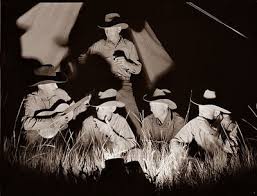
We heard of a group of headstrong male residents who had moved to the roof and were bonded in the brotherhood of a permanent encampment. As the stories went, they were staying, come hell or .... well they were staying. We did not immediately investigate stories of them lighting campfires and refusing to leave as there was adequate need within the confines of the enclosed floors. There were 10 or so others who declared their decision to stay, but all others were ready to do what was needed to get into a boat. They needed no knowledge of their destination.
Occasionally, during the constant flow of boats from this location and many others in the area, I would periodically return to the "landing" to monitor the situation and coordinate, if necessary with the retrieval of residents. "In America" anyone would expect resources and personnel to be available with coordination of efforts to transform the chaos of a natural disaster into an organized and fluid recovery. Not yet! As the day progressed, it became painfully obvious that the “seamless” coordination of rescue and relief operations promised by FEMA had not yet materialized.

Those brought to the road by boat were dropped in the blazing sun, on the smoldering asphalt shoulder of the highway to wait for land transport. Their wait was excruciatingly long, but they had no choice but to remain patient, as they had nowhere else to go. All they could do was sit, without water, without food, without their animal companions and without shelter.
 Transport vehicles appeared to wander into the area without schedule or plan. Rather than "first come first served" it became more "survival of the fittest" as many of the weaker and less agile would be brushed aside by those who best positioned themselves to enter whatever kind of wheeled transport might arrive. Those unable to gain entry on one wagon,would wait for the next carrier to unpredictably come by. Again, I was aggravated that this did not fit the mold of my upbringing. However, we were forced to accept that this discourteous unfairness was just another layer of skin on this big onion that we were not equipped to deal with.
Officers and some kind citizens attempted to care for the frail and injured, and to provide priority access for those not strong enough to fend for themselves. All in all it was a situation under limited control with little organization.
 As the day wore on with the prolonged intense heat and crowds on the roadside growing, it began to eat at some of us that many folks were not feeling “rescued”. Their placement on the highway to bake in the sun for hours, to await transport, occasionally by bus, but also by U-haul truck, open troop carrier or dump truck, was not what we envisioned or what they deserved after the ordeal they had already been through. We had no knowledge or control over their destinations. Our job was to get them out of the water. We had no information, authority or input beyond that.
The high-rise residents who were able, filed out of their 168 apartments. They ventured one-by-one, down the dark stairwells to the dock-less boat mooring. When their turns came, they would submit to partial submersion in the increasingly acrid waters before entering one of the tin can units of the rescue flotilla. For the entire day, our clothes saturated and skin wrinkled, we stood chest deep in water assisting each passenger.
Those who did not need to be lifted into the boat were directed to step onto the underwater chair positioned next to it. This provided us with assistance in getting each of them above the 4-foot water level and the additional foot and a half over the edge of the boat. Mickey Monceaux, an 11-year charter employee of R&R, assisting those who could not do so themselves, lifted more that a couple of tons of passengers into boats during the course of the day.
Those who did not need to be lifted into the boat were directed to step onto the underwater chair positioned next to it. This provided us with assistance in getting each of them above the 4-foot water level and the additional foot and a half over the edge of the boat. Mickey Monceaux, an 11-year charter employee of R&R, assisting those who could not do so themselves, lifted more that a couple of tons of passengers into boats during the course of the day.
Between boatloads, we would clomp up and down the stairwells, boots weighted with water, sweeping the building for those remaining. In the later hours, those remaining presented the most challenges. This was not due to their demeanor, as they were cooperative, kind and appreciative. These has limitations that prevented them from crowding into the stairwells to await their turns in line for debarkation. Despite impediments, the ones who couldn't make it to the submerged dining area to the bouncing watercraft, were nevertheless ready to go. They expected to leave like everyone else, and they expected to do it today Unfortunately, the circumstances evolved to the point that some would have to wait through the night... and perhaps beyond that.

A late afternoon survey revealed four residents in wheelchairs who could not walk down the stairs, even with assistance. One of those, a charming and pleasant lady named Connie, much younger than most of the other residents, had a serious brittle bone disease. She was encouraging, but made it amply clear that we would risk seriously injuring her if she had to leave her electric wheelchair. It occurred to me that housing wheelchair bound residents in a high-rise with no generator backup for elevators showed little forethought or no concern.


We considered trying to carry her from her chair down the many flights of stairs, but in our fatigued and saturated state, we risked injury to her and to ourselves trying to negotiate down the wet, slippery stairs. We considered moving her down the 6 or 8 flights in her wheelchair, but I had discovered earlier that day how bulky, unwieldy and extremely heavy these electric wheelchairs are. It had taken four of us to move each of three other electric wheelchairs without occupants earlier in the day. Connie was scared to go and she was scared to stay. Although the sun was still shining, we had no options.


In an apartment, we found two residents recovering from recent surgeries. With their spouses, they were packed and waiting in anticipation at the doors of their apartments as if expecting a taxi to arrive to drive them to the airport.

The boat returned with the news that there was no insulin for our diabetic friend, no other medical resources and no further land transport that afternoon.


Those remaining had physical impairments of some kind, limiting their mobility at very least. Earlier, I had asked each of them if they wished to risk injury by being moved with our limited resources, and each had said yes. As the daylight was waning I returned to inform each of them that we could not take them that day.
I could only relate this information to our unconscious diabetic friend through his nephew who would stay to tend to him through the night without medication. We lifted that gentleman off the floor and into his wheelchair and I mustered some weak words of encouragement for his nephew. I felt helpless and guilty that I was leaving them for the night. The only consolation was that they were better off here in familiar shelter than left on the roadside to fen for themselves.


We plodded wearily down from the upper floors, one fight at a time, checking each level for residents. Almost desperately, one of the long-married couples called to me as I walked away. Seated in their living room, dressed and prepared to leave, they let me know they would be ready at daybreak. I nodded and assured them that they would not be forgotten.

Although Connie was usually surrounded in this building by hundreds of other residents, she was essentially confined to her chair and to this space due to her condition. This bird represented something akin to family to her. Now, it was only her and her parakeet, being left to stare out the window at the sky, the moon and the water while contemplating what life held for her next. She beseeched me to promise that I would return in the morning.
Many of these occupants were at times in their lives that they had little more than themselves and the possessions contained in the confines of their living quarters. Their lobby, meeting room and cafeteria had by this time been under water for three days and would be for an indeterminate time to come. The parking lot, before Katrina, was the convenient welcoming area for the vehicles of family and friends who might visit, and for medical or emergency vehicles when needed. Now it too was cut off by the same darkening liquid that would seem to grow darker and thicker during the night.
Spirits buoyed by the arrival of boats this morning were now being replaced by tentative patience. These old souls, now stranded for three days feared that no-one would ever return if the opportunity today was missed.
Encouraged by information that Ronny had befriended a group of volunteers with fire-rescue and EMT experience as well as equipment, I assured the residents that they could expect a level of safety in their removal tomorrow that we could not have provided them today.
Moving into the sunlight out of the bowels of the last dark stairway, I thought for a moment that we had could make one or two more loads. Just as fleetingly, my mind flashed to images of the wet stairs, the heavy wheelchairs, the impaired residents and the turmoil at the roadside throughout the day. I accepted that we had done all that we could that day, and that those left in their familiar surroundings above would be in the best place until reinforcements arrived in the morning. Maybe by then, the area-wide strategic operation might be organized enough to actually do something with these less fortunate ones who needed care for their impairments.
My 50-year old body, pushed to its limits, did not feel pain or fatigue, presumably thanks to my adrenaline-diluted blood. Little in my usually mundane daily schedule could compare with my experiences of the last day and a half. It seemed like weeks since this had started. The isolation and poor conditions were unlike anything I had encountered before. The amount of physical effort and mental stress had been at levels ten or a hundred fold what I normally dealt with. At the same time, this experience was awakening senses long unused and was in many ways invigorating.

We floated slowly and carefully, retracing our flooded path back to the roadside dock. The waters and the day itself seemed refreshingly serene as the late afternoon sky turned orange and reflected off of the waters around us. Though it seemed like the end of the day was approaching, I knew nothing of the adventures we would face in its remaining few hours.
My 50-year old body, pushed to its limits, did not feel pain or fatigue, presumably thanks to my adrenaline-diluted blood. Little in my usually mundane daily schedule could compare with my experiences of the last day and a half. It seemed like weeks since this had started. The isolation and poor conditions were unlike anything I had encountered before. The amount of physical effort and mental stress had been at levels ten or a hundred fold what I normally dealt with. At the same time, this experience was awakening senses long unused and was in many ways invigorating.
We floated slowly and carefully, retracing our flooded path back to the roadside dock. The waters and the day itself seemed refreshingly serene as the late afternoon sky turned orange and reflected off of the waters around us. Though it seemed like the end of the day was approaching, I knew nothing of the adventures we would face in its remaining few hours.